How I Learned to Think Objectively After 10 Years of Unlearning
By Chuck ·
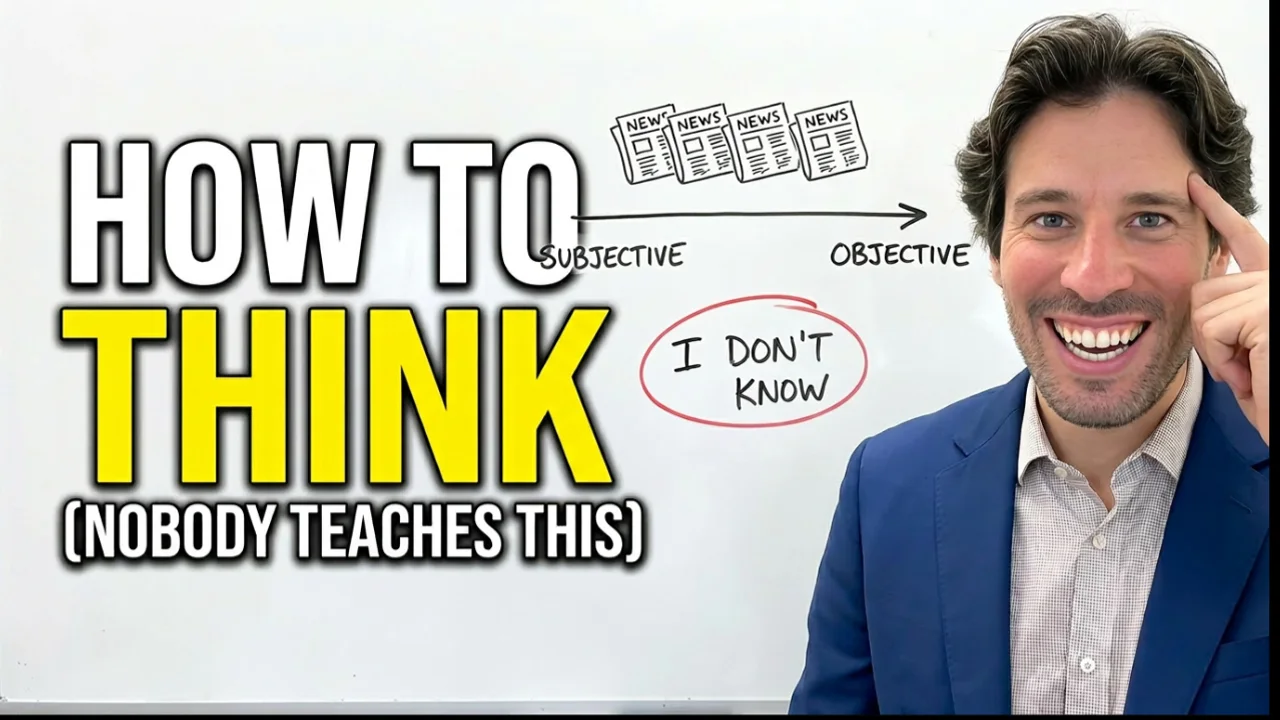
Charles Botensten maps the decade-long process of moving from emotional, distraction-driven thinking to something closer to objective reality — and shows exactly where most people get stuck.
Key takeaways
- Charles spent 10+ years in personal development before reaching objective thinking
- Silence and humility are prerequisites — not optional — for clearer thinking
- Charles estimates the Pareto ratio has shifted from 80/20 to closer to 95/5 due to social media saturation
- Every skill can be learned; not every skill will be mastered
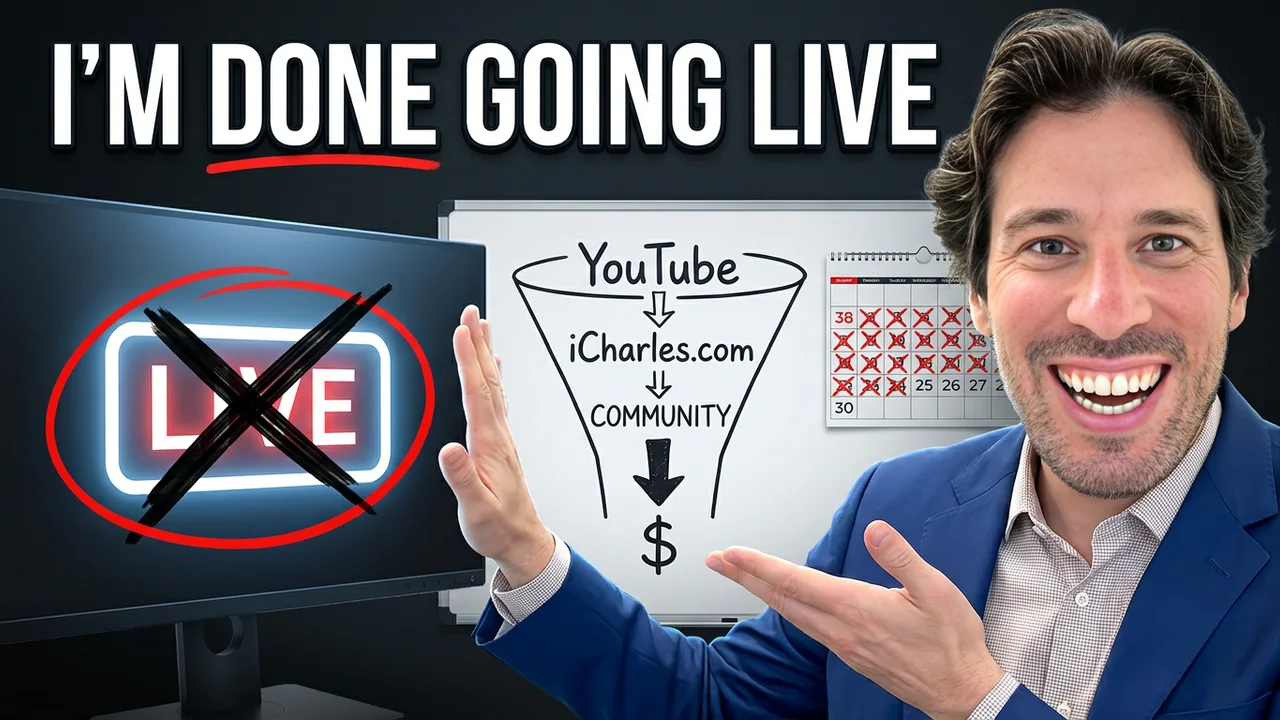
- Cloudflare video hosting replaced a self-hosted Mac Studio setup after a humbling infrastructure failure
Frequently asked questions
- How long does it actually take to shift from subjective to more objective thinking?
- Charles is direct about the timeline: over 5 years of unlearning, then another 5 years of relearning. He entered personal development in 2009 and says he only began thinking truly objectively around 3 to 4 years before this recording. He does not soften that number. It is a long process, and he says so plainly.
- Does "I don't know" work as a starting point for technical skills, not just life philosophy?
- Yes — and Charles uses vibe-coding as the proof case. Five months before this recording, he did not know what a markdown file was. He applied the same sequence: silence, humility, "I don't know," then learn. Markdown, Cloudflare configuration, and live stream infrastructure all entered his working knowledge through that same door.
- Why is creation the antidote to distraction?
- Charles's argument is structural. Consumption is passive and keeps you inside someone else's frame. Creation forces you outward — you have to ask what other people want, what value you are delivering, what problem you are solving. That outward orientation is incompatible with the purely emotional, self-referential thinking he associates with high distraction. It does not matter what you create: a chair, a painting, a website, a community.
- What went wrong with the self-hosted Mac Studio video setup?
- The Mac Studio could not handle the bandwidth, storage, or encoding demands of live community video at the quality Charles wanted. His own ISP was the bottleneck. YouTube handles encoding and adaptive delivery automatically. Cloudflare Stream handles bandwidth at scale. The self-hosted approach was philosophically clean but practically insufficient — and the stream is where he admitted that publicly.
- Is the 95/5 estimate Charles cites an established statistic?
- No — and Charles does not present it as one. It is his own read on how the Pareto ratio has shifted given social media saturation and population growth. He offers 90/10 as a more conservative version of the same intuition. Neither figure comes from a study he cites. They are his working estimates, stated as such.
Sources
- Wall Street Journal homepage wsj.com
- Financial Times homepage ft.com
- Cloudflare Stream developer documentation developers.cloudflare.com
0 Comments
Log in to comment
Not a member yet? Join the community
Pick a meme
KlipyHave a great take?
Drop your email — we'll send a magic link so you can post it. No password.
Not a member of the community? Join today.
Join the community →