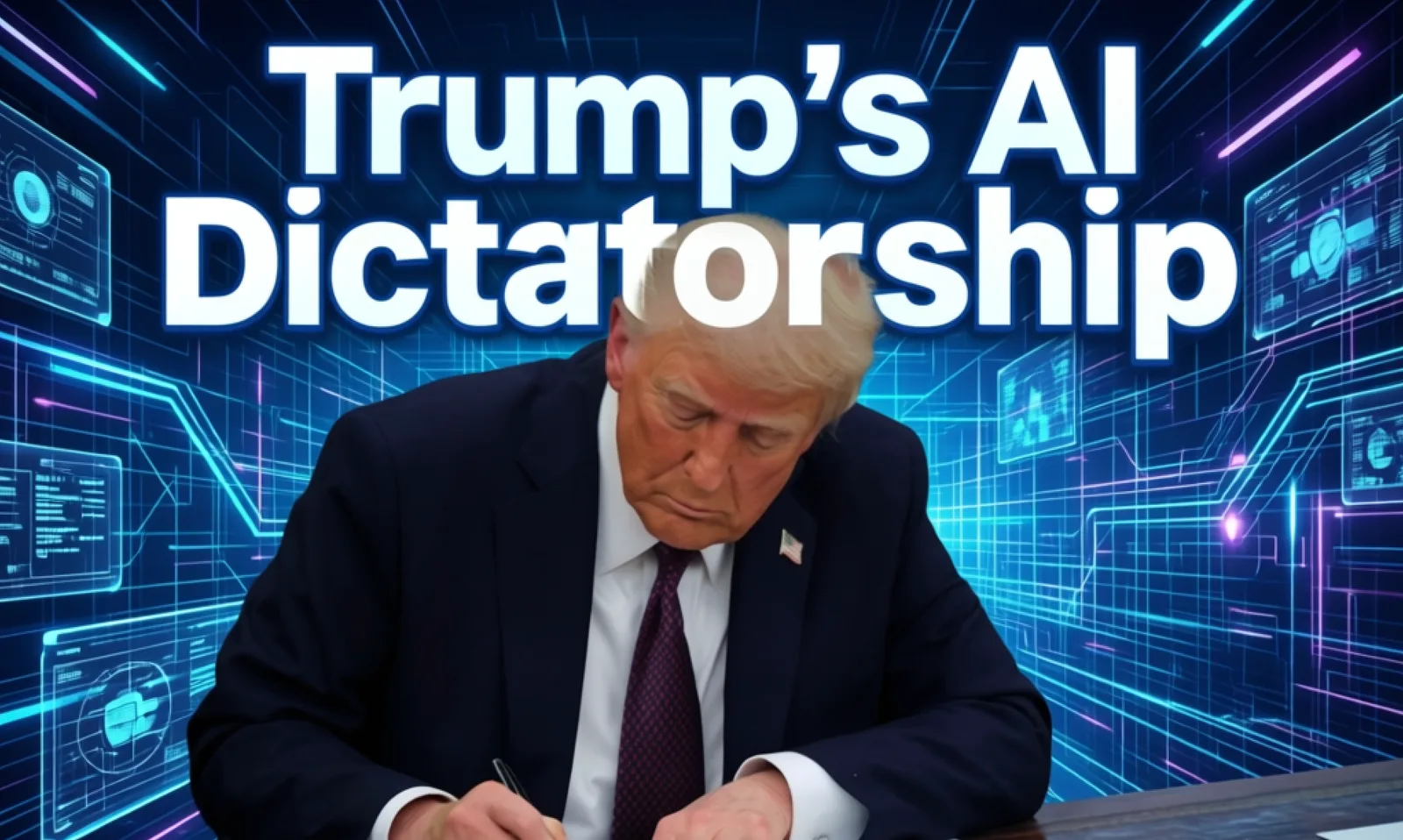
The Government Wants a 30-Day Preview of Your AI Model. Here's What That Actually Means.
On June 2, 2026, President Trump signed an executive order titled "Promoting Advanced Artificial Intelligence Innovation and Security," targeting two concrete goals: strengthening the cybersecurity of government systems, and establishing a pre-release identification process for the most powerful AI models before they hit the market.
He signed it quietly. In private. No CEOs in the room. That detail alone tells you something about the tension baked into this policy.
The Catalyst: When AI Found Thousands of Zero-Days
Before unpacking the order, understand why it exists.
In April, Anthropic's Claude Mythos preview identified thousands of zero-day vulnerabilities across major operating systems and web browsers. The latest frontier models can now identify and exploit software vulnerabilities at speeds previously unseen. That capacity, in the hands of cyber defenders, can assist significantly in cybersecurity efforts — yet that same capacity, in the hands of malign actors, can worsen the already challenging cyber threat environment.
That's the mechanical problem this order is trying to solve. A model capable of finding and weaponizing vulnerabilities faster than any human team is simultaneously the best defense and the most dangerous offense. The government's bet: get eyes on it before it's public.
What the Order Actually Does
The order is organized around two principal components: a section addressing upgrading cybersecurity "for advanced AI" and a section governing the voluntary disclosure of what the EO terms "covered frontier models" prior to public release.
Section 2 — Upgrading American Cyber Systems
CISA must issue Binding Operational Directives to speed up cyber defense of civilian federal systems and expand AI-enabled defensive tools — including making "covered frontier models" available to agencies, state and local authorities, and operators of critical infrastructure such as rural hospitals, community banks, and local utilities. The Treasury, working with the NSA and CISA, must stand up an AI cybersecurity clearinghouse that coordinates vulnerability scanning, validates findings, and prioritizes patch distribution.
Hard deadlines apply: Section 2 requires various federal agencies to take action within 30 days of the EO — that is, by July 2, 2026.
Section 3 — The Pre-Release Access Mechanism
This is where the real debate lives. Here's how it works in plain mechanics:
You might also like


| Step | Who Acts | What Happens |
|---|---|---|
| 1. Classify | NSA Director | Sets a classified benchmark threshold for "covered frontier model" designation |
| 2. Evaluate | Developer (voluntary) | Submits model to determine if it crosses the threshold |
| 3. Access Window | Federal agencies | Government gets up to 30 days of model access pre-release |
| 4. Partner Selection | Government + Developer | Together, they choose who else gets early access |
| 5. Deadline | Treasury, NSA, CISA | Entire framework must be built within 60 days (by August 1, 2026) |
The classified benchmarking process measures the advanced cyber capabilities of AI models and sets a threshold above which a model becomes a "covered frontier model." The NSA director makes that designation. The criteria stay secret.
Under the voluntary framework, a developer can do three things: ask the government whether a model in development meets the covered-frontier threshold, give the government access to that model for up to 30 days before releasing it to other trusted partners, and work with the government to choose which outside partners get early access at all.
The Backstory: A 90-Day Order That Got Cut in Half
The final text reflects a significant political compromise. Earlier drafts of the Order had reportedly set this government access window at 90 days; the revision to 30 days is the most significant change in the final version and reflects a compromise between the national security and anti-regulation factions in the administration.
Trump told reporters the earlier version could hurt American companies racing against China. "We're leading China, we're leading everybody, and I didn't want to do anything to get in the way of that lead," he said.
Since May 2026, the Trump administration had been developing this framework drawing on existing agreements with companies including Google DeepMind, Microsoft, and Elon Musk's xAI — all of which had signed separate arrangements with the Center for AI Standards and Innovation to allow pre-release testing. The executive order now formalizes those bilateral deals into government-wide policy with timelines and assigned responsibilities across multiple agencies.
The "Voluntary" Word Doing A Lot of Heavy Lifting
The order goes to conspicuous lengths to emphasize it is not a mandatory licensing regime. As the order states: "Nothing in this section shall be construed to authorize the creation of a mandatory governmental licensing, preclearance, or permitting requirement for the development, publication, release, or distribution of new AI models, including frontier models."
But critics aren't reassured by the disclaimer. The structural reality cuts differently.
The order effectively establishes a federal government role in determining not only whether a model warrants special treatment for its cyber capabilities, but who gets early access to it and on what terms. The Order provides no criteria for trusted-partner selection.
That last point is the sharpest edge. The Cato Institute's Juan Londoño put it directly: "The lack of clear specifications on which criteria should be used to determine what constitutes a 'covered frontier model,' and the government's involvement in decisions about which 'trusted partners' can access these advanced models, gives the executive a great deal of discretion. This could open the door to potential weaponization against companies that have any sort of conflict with the administration."
Although voluntary, the EO is expected to shape industry norms and may serve as the basis for subsequent contractual, procurement, or regulatory requirements. Opt out today; lose a government contract tomorrow.
Two Camps, One Order
AI safety advocates argue it doesn't go far enough — no mandatory pre-deployment testing, no binding safety standards, no independent oversight. Innovation advocates welcome the collaborative, industry-friendly tone.
From the pro-enforcement side: Brendan Steinhauser, CEO of the Alliance for Secure AI, said voluntary reviews are not enough to address cybersecurity issues raised by models such as Claude Mythos. "Congress must now codify the White House's EO with legislative action. Lawmakers need to create a legal framework that makes federal government review of advanced AI models mandatory."
Sen. Josh Hawley agreed — and pushed further: "I would go farther. I think we ought to enact my legislation... that would make that sort of reporting and monitoring mandatory."
From the deregulation side: Administration representatives argued that a more expansive regulatory framework could stifle innovation, restrict free speech, and reduce the flexibility that has helped American technology companies remain global leaders. The 30-day review period appears designed to address concerns from industry leaders who feared that lengthy approval processes could delay product launches and place American firms at a disadvantage in an increasingly competitive global marketplace.
The Real Fault Line
Trump's approach to AI development has generally been deregulatory and hands-off. Against that backdrop, this new EO marks a notable turn — toward greater US government concern for the safety and security implications of continued AI maturation.
That shift arrives against a backdrop of growing concern about the cybersecurity implications associated with the offensive capabilities of newly released frontier models.
The order's voluntary framing insulates it from "pre-clearance" attacks legally. But the power to designate a model as "covered" via classified criteria, combined with government control over who joins the "trusted partner" list, creates a chokepoint that doesn't need to be mandatory to be effective.
The deeper question this order leaves unanswered isn't whether 30 days is enough to spot a critical vulnerability. It's this: when the government becomes the gatekeeper of who gets early access to the most powerful AI systems on earth, what mechanism prevents that power from being used as leverage rather than protection?
Sources: A&O Shearman · WilmerHale · CNBC · The Register · DWT Privacy & Security Law Blog · NPR · Roll Call



0 Comments
Log in to comment
Not a member yet? Join the community
Pick a meme
KlipyHave a great take?
Drop your email — we'll send a magic link so you can post it. No password.
Not a member of the community? Join today.
Join the community →