What did Google publish about AMIE in Nature?
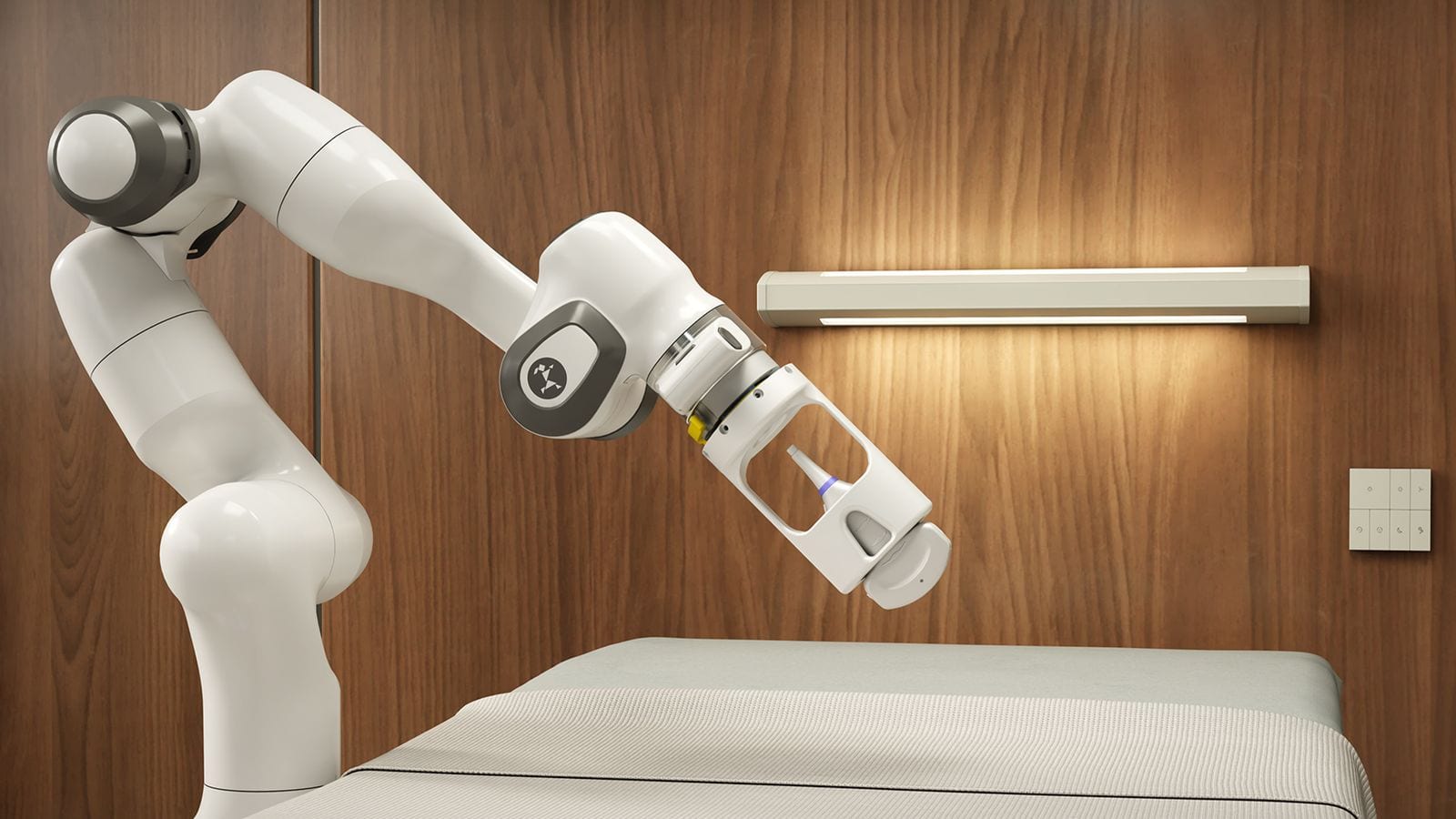
Google published research in Nature on June 17, 2026, showing that its AMIE (Articulate Medical Intelligence Explorer) system matched 21 primary care physicians in overall management reasoning. AMIE also scored significantly higher than those clinicians on plan preciseness and guideline alignment. The study was blinded and used patient actors.
AMIE is a research AI system built for medical reasoning and conversations. Unlike earlier versions focused on single diagnostic exchanges, this iteration handles long-term disease management — tracking symptoms across multiple appointments, parsing updated clinical guidelines, and fine-tuning medications, according to Google's research blog.
How does AMIE work technically?
AMIE uses the long-context capabilities of Gemini models. It combines two components: an empathetic dialogue agent for real-time patient conversations, and a deep-thinking management reasoning agent that cross-references hundreds of pages of authoritative clinical knowledge. The system was compared against 21 primary care doctors by specialist physicians in a blinded evaluation.
What is MIRA and how does it differ from AMIE?
MIRA is a separate medical AI model, also published in Nature on June 17, 2026. Where AMIE focuses on conducting complex clinical conversations and managing patients across multiple visits, MIRA integrates directly with an electronic health record. It can request diagnostic tests, prescribe medication, and recommend hospital admissions.
Ignacio Miranda Gómez, head of the Breast Imaging Unit at the International Breast Cancer Centre (IBCC) and Teknon Medical Centre in Barcelona, described the distinction clearly: "Whilst AMIE demonstrates that an AI can conduct a consultation like a doctor... MIRA aims to demonstrate that it can work like a doctor within a hospital."
You might also like


How did both systems perform against human doctors?
| System | Key capability | Performance vs. doctors |
|---|---|---|
| AMIE | Clinical conversations, multi-visit disease management | Matched clinicians overall; scored significantly higher on plan preciseness and guideline alignment |
| MIRA | EHR integration, ordering tests, prescribing medication | Matched or exceeded doctors in simulated settings |
Both systems performed at or above physician level in their respective simulated evaluations, per expert commentary gathered by the Science Media Centre. Areas of strong performance included adherence to clinical guidelines, accuracy of recommendations, and medication safety.
Are AMIE or MIRA ready for clinical use?
No. The researchers themselves state that neither system is ready for autonomous use in clinical practice. Both studies were conducted in controlled environments with simulated patients. Their efficacy and safety still need to be demonstrated in real hospitals and clinics.
Miranda Gómez noted that current evidence points toward a model of collaboration between healthcare professionals and AI — not replacement. In that model, AI handles analytical, administrative, and decision-support tasks, while professionals retain responsibility for clinical supervision, patient communication, managing uncertainty, and final care decisions.
This distinction matters for builders thinking about AI deployment simulation — controlled testing environments are not the same as real-world performance, a gap the medical AI researchers explicitly flag.
Where do AMIE and MIRA fit in the broader medical AI landscape?
Miranda Gómez placed the two systems in a three-generation framework alongside a third model published separately in Science. That third model, he said, can outperform medical diagnosis in a controlled environment. His framing: the Science model reasons like a doctor, AMIE conducts a consultation like a doctor, and MIRA works like a doctor inside a hospital system.
Here's what we know so far: all three studies represent distinct stages of medical AI maturity, and the researchers treat them as a progression rather than competing approaches.
The MIRA paper in Nature is titled "Towards autonomous medical artificial intelligence agents" and lists authors including Dyke Ferber, Lars Hilgers, Christiane Höper, and Benedict Kinny-Köster, among others. It was published on June 17, 2026.
As AI capex continues to climb, medical AI is one of the clearest areas where that investment is producing peer-reviewed results — not just product announcements.
The scale of ambition here also connects to broader conversations happening at the policy level. Questions about how autonomous AI agents should be governed were on the agenda at the G7 AI Summit attended by major AI lab leaders.
What are Google's next steps for AMIE?
Google says it is exploring how AMIE could work in clinical settings. The company also launched a nationwide study to assess AI in real-world virtual care. No timeline or location for that study was specified in the published materials.



0 Comments
Log in to comment
Not a member yet? Join the community
Pick a meme
KlipyHave a great take?
Drop your email — we'll send a magic link so you can post it. No password.
Not a member of the community? Join today.
Join the community →