What did Jeff Bezos say about AI and jobs?
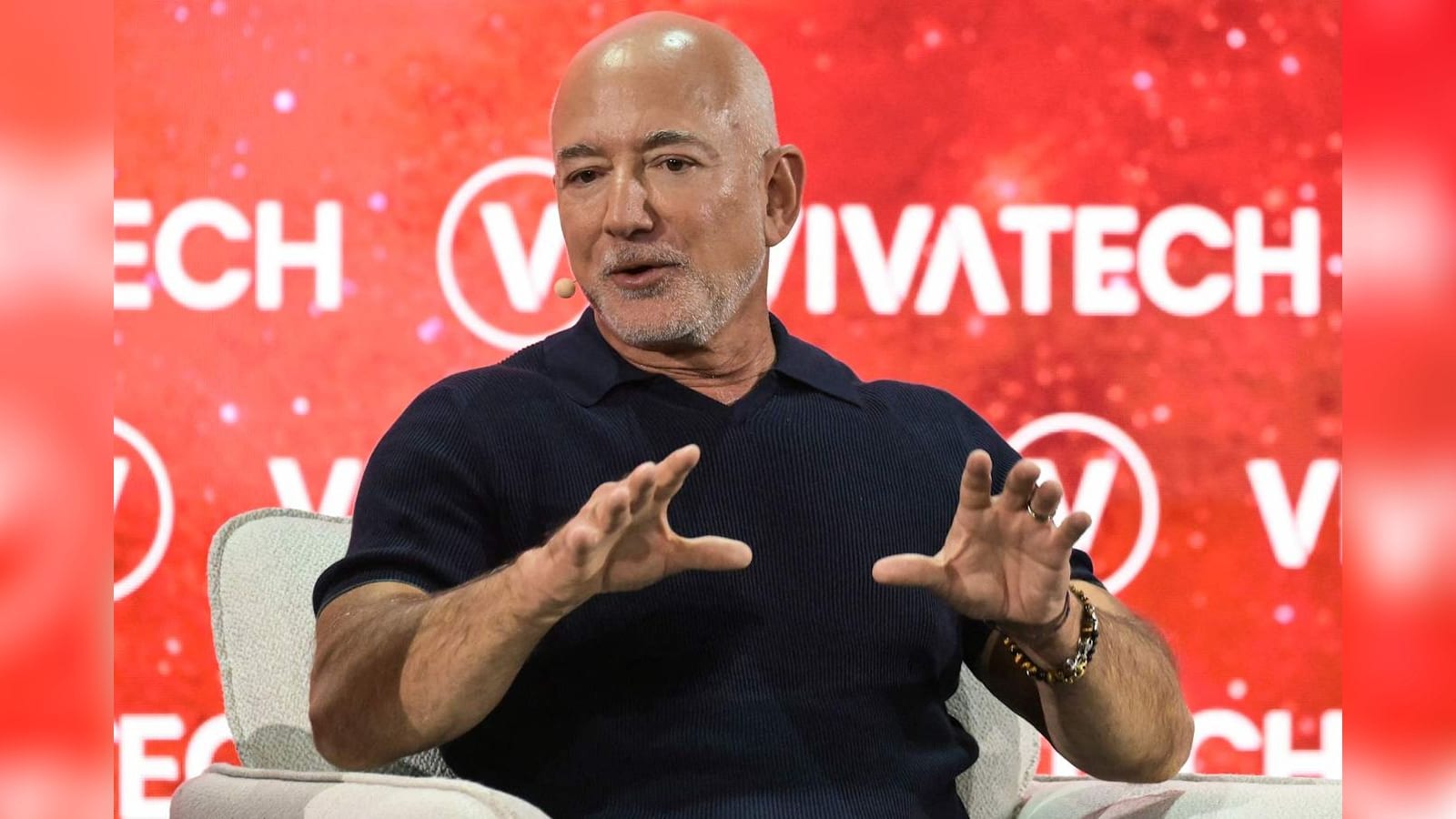
Amazon founder Jeff Bezos told CNBC on May 20, 2026 that AI will not wipe out jobs. Speaking on Squawk Box, he dismissed warnings that AI would replace skilled professionals like radiologists or software engineers. Instead, he said AI would push workers to operate at a higher level — "with a bulldozer instead of a shovel."
A software engineer's "real job is gonna be identifying problems and helping to solve them," Bezos said, rather than writing code line by line. "The work is gonna be done at a higher level," he added.
Will AI cause a labor shortage?
Bezos went further than most tech leaders. He predicted AI-driven productivity would actually create a labor shortage, according to CNBC. "We're gonna have so much productivity in our economy that, for example, this is one effect, a lot of people who have two-earner income households, one of the people is gonna drop out of the workforce," he said.
His argument: when workers become dramatically more productive, fewer people are needed to meet demand. That surplus capacity, he said, would ripple through the broader economy.
Does Bezos think AI will cause deflation?
Yes. Bezos predicted that AI productivity gains would push prices down. "I predict we'll actually have deflation," he said. "Because of the productivity gains, you're going to be able to afford things."
You might also like

This is a notable claim. Deflation — falling prices across the economy — is typically associated with weak demand, not technological abundance. Bezos framed it as a positive outcome tied to companies doing more with less.
What do executives and data say about AI hiring?
Business leaders are broadly optimistic, even as workers worry. Here's what the data shows, as reported by Investopedia:
- 47% of executives and senior HR professionals said AI use increased entry-level hiring at their firm last year.
- 13% said it decreased hiring over the same period.
- 42% said AI tools increased analytical and judgment-based responsibilities for entry-level employees.
- 33% said AI reduced routine tasks for those same workers.
- 46% of employers predicted an increase in entry-level hiring this year; 17% predicted a decline.
Those figures come from a survey by the Strada Education Foundation.
How worried are workers — especially younger ones?
Anxiety is rising, especially among people under 35. The share of Americans under age 35 who said now is a good time to find a job dropped 27 percentage points between 2023 and 2025 — from 70% to 43%. Among workers aged 55 and up, the drop was just 6 points over the same period.
That anxiety has a data foundation. The unemployment rate among recent college graduates rose 1.5 percentage points between November 2022 — when ChatGPT made generative AI front-page news — and March 2026. For all young workers, the rate ticked up just 0.1 percentage point over the same stretch.
The AI exposure is sharpest in tech. As of 2024, new computer engineering graduates were unemployed at a higher rate than fine arts majors: 7.8% versus 7.7%. Major tech companies have shed tens of thousands of jobs over the past year, frequently citing AI's impact on productivity.
The public-versus-expert divide is also stark. Nearly two-thirds of U.S. adults polled in 2024 predicted AI would lead to fewer jobs over the next 20 years. Among AI experts, only 39% said the same. Experts were four times as likely as the general public to predict AI will create more jobs than it eliminates — 19% versus 5%.
What does history say about technology and jobs?
Goldman Sachs economists found that about 60% of U.S. workers today hold jobs that didn't exist in 1940. They estimate that 85% of all employment growth since then may be attributed to jobs created by new technologies. Spikes in unemployment from new technologies tend to fade within two years, the economists found.
Here's what we know so far: Bezos is making a historically grounded argument, but the current data on recent graduates and tech layoffs shows the transition is not painless for everyone in it right now.
The broader debate over AI workforce impact is playing out across industries. Builders tracking AI productivity gains and AI coding tools are watching these labor dynamics closely. The question of how AI reshapes entry-level roles is central to how companies are hiring right now.
Key figures at a glance
| Metric | Figure | Source |
|---|---|---|
| U.S. adults predicting fewer jobs from AI | ~65% | Pew Research (2024) |
| AI experts predicting fewer jobs | 39% | Pew Research (2024) |
| Executives saying AI increased entry-level hiring | 47% | Strada Education Foundation |
| Recent grad unemployment rise since Nov 2022 | +1.5 percentage points | Investopedia / March 2026 data |
| Under-35 workers saying good time to find job (2025) | 43% (down from 70% in 2023) | Investopedia |
| New computer engineering grad unemployment (2024) | 7.8% | Investopedia |
Bezos made his remarks during a wide-ranging Squawk Box appearance on May 20, 2026, where he also discussed wealth disparity, the U.S. tax code, and the future of space data centers.




0 Comments
Log in to comment
Not a member yet? Join the community
Pick a meme
KlipyHave a great take?
Drop your email — we'll send a magic link so you can post it. No password.
Not a member of the community? Join today.
Join the community →